ラベル Flex の投稿を表示しています。 すべての投稿を表示

2022年9月19日月曜日

為替レートが、、、、

144円/$とか145円/$とかなって、ちょっと円安が止まりそうもありませんが、OQRSとかDXCCの申請とかにボディブローのように効いてきますね~。

何の気なしに、今月は4つほどOQRSリクエストしていますが、みんな800円前後かかっているので、これだけで4000円近くになっている!  100円前後の頃は高々500円(殆ど300円台)なので、気楽に4~5つOQRSしても2000円。

Elecraftだー、Flexだー、Expertだー なんてとんでもない時代になってしまった。

何とかして頂戴!といってももう100円を切ることは無いだろうな~。  

360円時代にCQ誌の折込に入っていた所謂名機の回路図見ながら、カッコいいなーって舌なめずりしながら、ああでもない、こうでもないって真似して自作気を作っていた60年代初頭を思い出してしまいます。


2016年3月15日火曜日

IC7300のレビュー

YOの局によるレビューがありました。
フェアな説明になっていますが、過入力に対する歪の問題には気が付いていないのでしょうね。 フロントエンドの設計をもう少し注意深く行えばAnanのApacheは最低でも凌駕していたのではないでしょうか? 
 手前味噌ですが、Flexの使っている(6500,6700)ADCやFPGA等は比較の対象にならないハイスペックなので、同等の性能を期待するのは難しいかもしれませんが、トータルの性能はFPGA等のデジタル部分に大きく依存する問題なので、ソフトの書き方でかなりの部分はキャッチアップできるかもしれません。 Icomの今までに培ってきたデジタル技術力が期待されます。 
 Flexの導入したWNB(ノイズのサンプリングを広範囲で行うノイズブランカ)はノイズの種類により20dB程度の改善が認められますが、 ご近所のオーバードライブしたPW-1を使っている局が出てくるとバンド全体のノイズレベルが変動し(CWだと内容が聞き取れる)使い物にならなくなります。 もっと、改善の余地があり、努力を期待しています。

1970年代の初頭CQ WWやARRLのコンテストに参加し、TS520のフロントエンド性能に疑問を持ったのですが、 理論的には分かっていても処理スピードの問題からダイレクトサンプリングなんて夢の夢(アマチュアの機械で出来るはずがない)と思っていたのが、40年ほどで10万円台で入手できるようになったのには驚きです。 メーカが切磋琢磨してさらに高性能なリグが安価に販売されることを期待しています。


2015年9月24日木曜日

SmartSDR v1.5

皆があまりに「何時出る、いつでる。約束と違うじゃん」と煩いので、リリース日時の予告をしなくなってしまったFlexですが、やっとv1.5.0がリリースされました。 今回の目玉はWNB(Wideband Noise Blanker)。 要するにImpulseNoiseを広い帯域で拾って来て、ブランキング情報とすることにより、より使いやすい(?)NBにしようという試み。  communityを見る限り、評価は高いですが、一部「効かねー」という声もあります(ノイズの種類によって効果がかなり違うので、勘違いしているのかも)。 これで、AGC-T,WNB,NR,ANFと4種類のノイズ処理アルゴリズムが用意されたことになります。 
マニュアルも、ここら辺の説明が強化されています(そもそも、デジタル処理されているのにAGC?ってオカシイのですが、機能としてのAGCです)。

AFSKのRTTYがモードとしてサポートされましたので、少しRTTYが快適になりました。 これの実験でSU9IGと昨日QSOしました。  週末のCQ WW RTTYでもう少し遊んでみようと思います。

Release Noteにはこれ以外にも、D-STAR、FDX,など幾つかありましたが、特に必要が無いので今は読み飛ばしています。 

例により、インストールは何の問題もなく終わり、すんなり1.5が本体にもインストールされ、一度電源を落として再起動すれば、「はい、新しいリグの一丁上がり」というのが嬉しいです。

週末に来るのかな?と思っていたら先ほどFlexInsiderが来ていましたの、下に張り付けておきます。

 
September 2015
Issue: 5-15
THE FLEX INSIDER
A Word from our CEO -  
 
Greetings!
Gerald Youngblood, K5SDR - President & CEO
     
We are pleased to announce immediate availability of SmartSDR v1.5 for the FLEX-6000 Signature Series.  My sincere thanks to our highly dedicated software team and alpha testers for their great work on this release.  I encourage you to read Steve Hicks' article below for more detail on the exciting new v1.5 features including Wideband Noise Blanking (WNB), SO2R on the FLEX-6700, Full Duplex (FDX) operation, RTTY filter mode, digital mode offsets, and D-STAR using ThumbDV.  These are exciting times in ham radio made possible through the magic of direct sampling SDR technology!
 
Last year we opened the SmartSDR Application Programming Interface (API) to software developers and have been overwhelmed with the positive response.  There are now almost 100 developers signed up for both amateur and commercial use.  Read the article on our FlexADP program below to learn more about new third-party applications such as FLEX-6000 Series client software for the iPad and Mac along with tight integration with DXLabs, MacLogger, N1MM+ and Writelog.
 
Maestro is progressing toward Q4 production ramp up. Production samples of the injection molded plastic and machined metal components all look great!  We are working out the final details with our manufacturing partner so that we can be in full production volume in time for the holiday season. We are still taking pre-orders if you would like to reserve your place in line.  
 
Up next our team is well underway on development of SmartSDR v1.6, a contest themed release.  Stay tuned .  
 
We sincerely hope you will enjoy the new features of SmartSDR v1.5. 
 
73,
Gerald, K5SDR
FLEX-6000 Engineering Update
by Steve Hicks, N5AC - VP, Engineering

This month we're releasing SmartSDR v1.5 for all FLEX-6000 Signature Series radios.  SmartSDR v1.5 has a number of exciting new features that I'd like to tell you about.  First, let's talk about noise mitigation.  As you may remember, we committed to conduct separate research projects on each of the noise mitigation functions (automatic notch filter, noise reduction and noise blanker), looking at each feature in detail and doing fundamental research to yield the best noise mitigation possible.  With SmartSDR v1.4 we released an all-new design noise reduction and automatic notch filter that are far superior to others in the industry.  These were added to our ever-popular Tracking Notch Filter™, a FlexRadio exclusive that allows permanent notching of noise sources that are then remembered and tracked by frequency.
Wideband Noise Blanker
With SmartSDR v1.5, we again pulled out all the stops to do more fundamental research on noise blanking and have come up with what we believe is the most advanced noise blanker in the industry.  We started out looking at the existing well-known algorithms, comparing the performance of these along with several competing radios to see how each performed.  There were a number of issues with each of the noise blankers we tested.  We found that by increasing the bandwidth available to the blanker, we were able to overcome the shortcomings in many of the existing blankers and more accurately find and isolate the sources of noise.  This also allows us to remove much less of the signal while removing the noise.  We also made the blanker intelligent and able to adapt to changing band conditions and radio settings to optimize the removal of noise sources.   
 
While we've dubbed this new class of noise blanker a Wideband Noise Blanker (WNB), it is much more than it's name implies.  We truly believe we have set a new standard for correlated/impulse noise mitigation.  The new SmartSDR WNB approaches magic in removing impulse noise like that emitted from a faulty power pole insulator across the street from our office.  When we point our SteppIR antenna tuned to 40m toward the power pole, the band is completely unusable due to noise.  When we turn on WNB, the noise floor drops 20-30 dB and the band below the noise suddenly appears.  This video provides a good demonstration of the WNB and can be found on our website.

We've received similar videos from our alpha test team and we'd love to see your videos showing how the new WNB takes out your tough noise sources!
 
RTTY Mode and Digital Mode Offset
While we've had digital mode settings in the DIGU/DIGL modes since the inception of SmartSDR, there were a number of things that could be done to enhance RTTY operation that really fell outside of generic digital mode settings.  So we've added a specific RTTY mode to SmartSDR in v1.5.  The RTTY mode understands RTTY offsets, correctly moves the mark tone to a clicked location in the panadapter (rather than the location where a 0Hz carrier would be), properly highlights where mark and space tones should be in normal and while RIT/XIT are active, automatically expands your filter if you alter offsets and shifts, and correctly moves to the exact frequency reported through CAT when a spot is selected in an external program.  We hope these additions will make operating the FLEX-6000 in RTTY mode a pleasure.
 
 
For other digital modes, an offset was also added that allows the same point-and-click capability.  For example, if your offset is set at 1,500Hz and you click on a panadapter signal in a DIGU/DIGL mode, your carrier will be 1,500 Hz below (or above) the signal and the filter will be properly centered on the signal where you clicked.
 
Logger Integration
We've continued to work with several logging programs, including N1MM Logger+, Writelog, DXlab Commander and MacLoggerDX to check functionality within the loggers and ensure that SmartSDR does all the "right things" in support of the logger's requests.  We've asked experts on the loggers who regularly contest with each of them to report any issues or enhancements they feel would enhance operation.  Then we've gone about adding as many of these fixes and enhancements as we could to streamline operations. This is also part of a larger program at FlexRadio to enhance the FLEX-6000s contesting capabilities.
 
D-STAR Mode
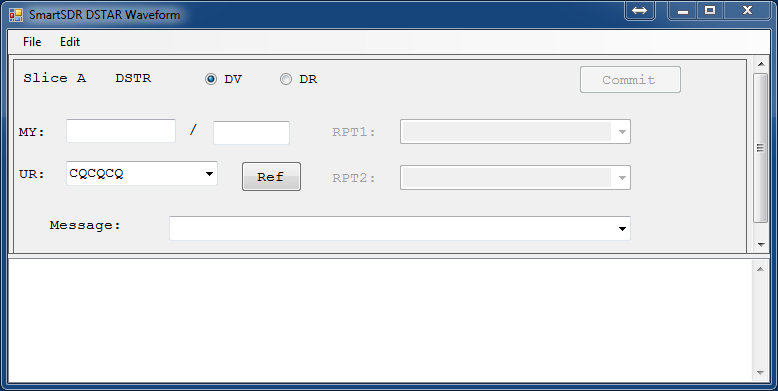
Continuing with our addition of the FreeDV/CODEC2 digital voice mode in v1.4, we are adding the D-STAR mode in v1.5. Since the underlying codec in D-STAR is the AMBE codec, the codec must be licensed from its owner, DVSI.  We've teamed up with NW Digital Solutions to offer the ThumbDV device (available on our website  here) which contains a chip licensed for the codec.  To operate D-STAR, simply insert the ThumbDV into an unused USB port on the back of your FLEX-6000 and install the ThumbDV Waveform available on our website www.flexradio.com/downloads/smartsdr_d-star_waveform_installer-exe/. Your FLEX-6000 will now have the D-STAR mode (selected as DSTR in mode selection).  There are more details on how to operate D-STAR in the documentation at www.flexradio.com/downloads/d-star-waveform-how-to-guide-pdf/. 
 
 
We've done extensive interoperability testing with Icom radios, verifying proper operation on HF as well as through repeaters and gateways using the FLEX-6700's VHF capability.  Because all FLEX-6000 models support transverter operation, you can operate D-STAR on ANY amateur band with an external transverter.  Special thanks to Mark, AA3RK, one of our FlexADP members for his work on the D-STAR user interface!
 
Full Duplex
The FLEX-6000 was designed with full duplex capability in mind -- that is the ability to transmit and receive simultaneously.  We've now added the software components to make this a reality.  After selecting the full duplex mode by clicking the FDX icon in the lower left of SmartSDR, your FLEX-6000 can transmit and receive at the same time.  This enables a number of capabilities including satellite operation (with the addition of external transverters) as well as continually monitoring a DX station while you are calling him split, monitoring a net control frequency while you are transmitting as a liaison on another frequency, monitoring a 2-meter frequency while transmitting on HF (FLEX-6700), and SO2R operation in a single radio (more on this in the next section).  Full duplex does require a different transmit and receive antennas and the isolation of the antennas at your station will impact how well full duplex works for you on HF. This is an exciting new capability not offered in many transceivers, but now part of every FLEX-6000.
 

630m and 2200m
For those of you that are experimenting with 630-meters and 2200-meters, we added support for these bands as licenses were issued, but we used the frequency rather than the wavelength on the buttons in SmartSDR.  Since most folks are referring to them by their wavelength, we've changed the buttons to 630 and 2200.  While we're on the topic of new frequencies, some of the EU countries are being issued new privileges in the 60m band and we've modified SmartSDR v1.5 with these updates as well.  We're preparing an update to PowerSDR that includes these new bands as well.
 
SO2R for FLEX-6700
SO2R, or Single Operator 2 Radios, is a contesting method for single-op contesters wherein two transceivers are used to maximize score.  Generally, the operator will transmit on one radio, say calling CQ as a run station, while listening on the second radio for a multiplier.  After calling CQ on radio one, the operator will listen for someone to call him on the run frequency while calling the multiplier he has found on the second radio.  In this way, the operator makes use of two radios. In most contests, an SO2R operator may use only a single transmitter at a time.  It is well established that this can add around 30% to a contester's score and that this gain in score is generally unattainable using other methods.  
 
The chief problem with SO2R is that it requires purchasing a second transceiver and a pile of ancillary equipment ... until now.  In v1.5 we have added support for SO2R in a single radio with the FLEX-6700 -- another industry first.  We have done extensive testing with the FLEX-6700 in a SO2R configuration and have worked out all of the details to make this completely seamless.  As with all contest operations, your antenna configuration, amplifier setup (if present) and filter requirements will vary with site configuration.  We've provided some guidance on how to get the most out of SO2R operation on a FLEX-6700 in the SmartSDR Software Guide and there is a lot of web and book documentation on how to setup your station for SO2R if you've never done this before.
 
What are the benefits of operating this way?  If you are a single-op contester, you know that the second transceiver is only part of a SO2R solution.  With two radios, you now need control boxes to interface a single microphone and keyer to the radios, switching between them when necessary.  Digital modes have similar issues.  What if you could just plug your mic and keyer into the radio without all the external devices to make everything work?  This is how it works on a FLEX-6700 with SO2R!  Not only is there a huge cost advantage, the station complexity is significantly reduced.  We've already released a "SO2R Mode with N1MM for the FLEX-6700 How to Guide" document on how to get this going with N1MM that you can download and you'll want to check out all the details on ensuring your station is ready for SO2R in the SmartSDR manual to get started.  Why buy two radios when you can use one?

We're very excited about the new capabilities we've added in v1.5 and I hope you are able to see that "we're just getting started."  The promise of software defined radio is the enhancements that can be added to existing hardware with the addition of software.  While there are other SDRs on the market, we hope you'll agree that no one is adding new capabilities at the pace of FlexRadio.  On that topic, we're just getting started on v1.6 now.  v1.6 will focus on additional capabilities for contesting and we are targeting a release before year-end.  Until then, happy operating!

73,

Steve, N5AC
FlexADP - Third Party Applications Now Available 
by Lori Hicks, Marketing                                         

SmartSDR for the FLEX-6000 Signature Series radios offers a world of possibilities for software interfacing.  For the first time in amateur radio history, a transceiver is completely controllable using standard Internet protocols, TCP/IP, UDP/IP and VITA-49.  With SmartSDR's APIs it's easy to integrate existing programs with the FLEX-6000 series transceivers or build new interfaces, control systems or even new modes. The possibilities of what can be achieved are virtually limitless.
The FlexRadio Application Developer Partner (FlexADP) Program provides resources and support to developers fashioning applications and mobile apps that work with the SmartSDR APIs.  With enrollment in the FlexADP, developers enjoy access to pre-release versions of software, forums where software functionality can be discussed with other developers and access to documentation and software resources for all of the SmartSDR API components. 

Today, FlexRadio has close to 100 participants in the program. Below you will find descriptions and links for a few of the products/applications optimized to work with FlexRadio FLEX-6000 Series transceivers that are a direct result of the program. We thank each of the developers below for providing descriptions of their offerings and we encourage you to try them out.   We hope you find them as exciting as we do.

K6TU Remote - iPad client for the FlexRadio 6000 series by Stu Phillips, K6TU Stu Phillips, K6TU is likely familiar to many of you as one of the designers of the FlexControl as well as his K6TU Control virtual front panel iPad application for controlling the Flex-6000 series in conjunction with SmartSDR.
Stu is also the designer of the Objective-C interface library allowing Apple iOS and Mac OS X applications to interface to the native Ethernet API of the FLEX-6000 series radios. This software is used in Stu's K6TU Control app as well as MacLogger DX and the new dogparkSDR Mac OS X application from Dogpark Software.
Together with Stu, we are happy to announce the upcoming availability of Stu's latest iPad app, K6TU Remote. The app should be in the Apple App Store by the end of October 2015. K6TU Remote is a native client application allowing full remote control of the Flex-6000 series radios over the LAN. The app provides a high-resolution pan-adaptor and waterfall together with controls to allow the radio to be operated for DX, Contesting or rag-chewing operation.
 
K6TU Remote supports a single pan-adaptor and up to two slices.   The iPad speaker and microphone (built-in, wired or wireless headset) provide the support for remote audio on transmit and receive.
The first release supports Phone operation only, with CW support coming in the next release. Stu has had some 25 Flex-6000 owners alpha testing the app and was encouraged by them to release the functionality as it is completed on his roadmap.
When available in the Apple App Store, K6TU Remote will be available for free download supporting receive-only operation on a single slice. You will be able to subscribe to the full capabilities of the app through an in-app purchase of either a monthly or yearly subscription. The subscription unlocks the second slice and enables transmit operation. The subscription covers all new features released during its time limit. At the end of the subscription, the app reverts back to single slice receive-only operation unless the subscription is renewed by the user.

Stu is planning a series of releases that, over time, will add many new exciting capabilities and features.

Pricing for US customers is $9.99 for a one-month subscription and $99.99 for a one-year subscription.
 
 
dogparkSDR Version 1.0 Public Beta released 
Dog Park Software is pleased to announce that version 1.0 Beta of dogparkSDR, the first native Mac client for the FLEX-6000 Signature series SDR radios, has been released.


dogparkSDR will include the following in the first version: 
* OS X 10.9+ and Intel 64 bit Processor. 
* OS X 10.11 (El Capitan) compatible. 
* 1 Panadapter and 2 VFO Slices.
This is a free public Beta and can be downloaded from http://dogparksoftware.com/dogparkSDR.html  
There is a 20 minute timeout on this demo but it can be run multiple times.
Since 1991 Dog Park Software Ltd. has been providing the Amateur Radio community with the best in Ham Software for the Mac and iOS including MacLoggerDX, MacDoppler, MacLoggerDX for iPad, iSpectrum Audio Analyzer and now dogparkSDR for the FLEX-6000 Series from FlexRadio Systems. 

DXLab Suite- Dave, AA6YQ
DXLab Suite is a free set of applications that support DXing activities. They can be used individually, but when multiple DXLab applications are running, they detect each others presence and interoperate automatically. DXLab's Commander application has been managing FLEX transceivers since the early SDR-1000 days. The latest version of Commander, now in beta test, employs the FLEX Signature Ethernet API to provide full access to the FLEX-6300, FLEX-6500 and FLEX-6700 SDR's capabilities. More information can be found on the DXLab website
 
FRStack - Mark Hanson, AA3RK
FRStack is a SmartSDR companion application that provides Band Stacking, Memory lists with Favorites, Memory Scan Banks, Global Hotkeys for popular SmartSDR functionality, Remote Foot Switch, Mute non-active slices, TX follows active slice, SSB / AM Meter Level Mute (Squelch), and many others.

The latest version of FRStack supports SmartSDR v1.5 and adds support for the following:
  • Memory editor
  • Support for new Demod modes
  • Meter Level Mute now works with SSB, AM and FDV
  • Meter Level Mute now for each Slice
  • SmartSDR / FlexLib V1.5 Support
  • Support for RTTY and DIGL/U Offsets
FRStack was made possible by the FLEX Applications Developer Partner (FlexADP) Program. The FlexADP program provides the necessary software APIs and guidance to enhance and extend the already great FLEX-6000 SDR experience.
 
FRStack is free to download and use. It can be found at
http://www.mkcmsoftware.com/Flex
 
 
For more information on the FlexRadio Application Developer Partner Program visit our website.
73,  
 
Lori
In This Issue
Engineering Update
FlexADP Third Party Applications
Upcoming Events

HamExpo
Belton,TX
October 3rd

Pacificon
San Ramon, CA
October 16-18
FlexRadio Systems
4616 W. Howard Lane, Ste. 1-150
Austin, TX 78728
512-535-4713(main), 512-233-5143 (fax)
 www.flexradio.com / sales@flexradio.com

Copyright 2014. FlexRadio Systems is a registered trademark and SmartSDR is a trademark of FlexRadio Systems.  All Rights Reserved.  Information contained in this newsletter is the
sole property of FlexRadio Systems and may not be distributed or posted without the express


2015年8月25日火曜日

IcomのIC7300

ハムフェア2015】<PDF版カタログ公開>アイコム、コンパクトなHF/50MHz帯エントリーモデル「IC-7300」を発表

Flexのコミュニティではこれが話題(問題?)になっています。業界初のRFダイレクトサンプリング!! 「俺たちはメーカーとしての扱いを受けていない!」ってね。

大体がエントリーモデルで15万円、で業界初のRFダイレクトサンプリングというのはちょっと常識を覆す感じで、「RFダイレクトサンプリングでは、まともな受信機にならない=エントリーモデル」と思っているような気がしてなりませんが、、、。

ハムフェアでもIcomの展示ブースの前を何度か通りましたが、「業界初」を謳うような展示では無かったような気がします。 あくまでも廉価な普及機としての展示。 で、ブースでの説明も7851のフェーズノイズがどうのこうの、っていうのが記憶に残っています。

ま、営業戦略的に7851より性能の良い製品を廉価でぶつけることは考えられないので、業界初何て言っているけど、様子を見ながら、、、ってことかな。 バンドスコープを目玉にしているところも、「分かってないんじゃない」っていう感じではあります。  ダイレクトサンプリングはUSBのドングル位に思われているのかな? 

あんまりずれた認識だと、後々任天堂のような事になっちゃうかもしれませんが、、、。

IC-7300のパンフ

RJ45が無い、とか色々ケチを付けている書き込みもあるみたいですが、入門機(普及機)からSDRが導入されてゆく、というポリシーには疑問を感じます。 パナアダプター(バンドスコープ)のような素人受けする機能が簡単に実現できるからかもしれませんが、周波数変換を伴わない分だけ、ダイナミックレンジとかスプリアスとか受信性能の向上に対する貢献の方が本質的な部分だと思うのですが、、、。 そう言えば、40年ほど前にSwanのトランシーバが売り出された時に、その回路を見て「なんだ!これ?」って思ったのを思い出します。 でも、各段のレベル合わせでダイナミックレンジが大きく変わってくるので、あのくらい単純(ストレート)の方が性能は出しやすいんですよね。 つまらなくても、受信機は出来るだけ単純に、、、と思ってます。

2015年6月28日日曜日

Copy from Flex community "Why I chose Flex for contesting"

Copy of post I made to Uk contesting reflector re contesting radios thread, on why I chose flex:
All,

I took the plunge last October and bought a flex 6300, after months of research and review reading. It was looking like better value for money than a k3, with similar or better performance, and I was still not happy with the pro3 I had bought the previous year on ssb on 40m and 20m in major contests or in 80m during afs ssb.


FT1000D had been my main hf contesting radio for last 15 years, with ft1000mp and ft1000mpmk5 with inrad filters coming and going out the door. My last ft1000d had a funcube dongle hung off the if out on the rear and hdsdr software running to give me a 192kc bandscope - work great and gave me the taste for bandscopes finally. But, the ssb close in performance of the radio, even with inrad ssb filters fitted, was still not great.


I bought a second hand pro3 and liked it a lot, especially its performance on 6m and with a cheap transverter on 4m, and its bandscope was good for 4m and 6m contesting to see most of the band. On hf ssb its performance was better than the ft1000d so my third ft1kd was sold on to a new home.


I bought a second hand ts590s - excellent value for money and loved the usb interface. Excellent on cw and better than the pro 3 on ssb with the roofing filters. But it had the alc overshoot issue which was a pain on 6m with a solid state pa. Sold it on last year just after I bought the flex 6300. If I was looking for two identical radios to do so2r without the need for a bandscope I would buy two ts590sg radios - I know some have bought two for so2r and they are excellent value for money compared to a k3.


Why no k3 here? I have used several k3s in ssb and cw contests and just don't like the build quality or the ergonomics - but mainly I don't like the cost of the spec I would need for ssb and cw contesting plus the 6m pre amp!


Why no ft5000mp here? I have used one locally, and have twice gone to buy one, but the reliability issues on the oleds and some respected cw dxers views on them for cw has stopped me each time. I came to the conclusion last year that if I bought one I would need an lp pan2 as well to give me a decent bandscope rather than toy that comes with it. The recent price drops indicate that it was a wise decision to not buy one, and second hand values have  dropped heavily.


Is the flex 6300 difficult to get used to? I sold my microham so2r box as I was fed up with fiddling around with w7 sound settings and microham router settings on data contests. By contrast I found the flex easy to set up and use without the usual reading of the manual that I had had with legacy radios. I concluded last year that the computer had to be at the heart of any contest station and a few weeks with the flex 6300 with just a mouse and cw paddle alongside N1MMplus convinced me that I had made the right decision. The real bonus though was the better performance on lf dx and 40m ssb under crowded contest conditions - wow what a difference. I have also found that I receive better audio reports with the same heil hc5 headset as previously used, on hf and vhf. CW performance is superb and the latest software version has improved apf as well as nr.


Is it contest radio?  Well I have used it in most of the 80m CCcontests, cqww cw, ssb and cw afs, beru, 160m cw, and 6m and 4m ACs  plus 4m cumulatives.   I sold my pro 3 and 4m spectrum, and now have a Kuhne db6nt 4m transverter hanging off the flex 6300 transverter port - in vhf contests I can now see the entire 4m and 6m bands, and I can monitor both bands on separate panafall displays on my laptop away from the shack using lan wifi to connect remotely to my flex 6300 in the shack - I can even now operate ssb using my laptop speakers and mic or a usb headset and cw using the keyboard, with no lag across the lan. So I can be in the kitchen or living room and can monitor audio or see both 6m and 4m bands (or two other bands) watching for sp es openings and watching for beacons popping out of the noise. On 6m its ears with the 20db pre amp switched in are slightly better than my icom 7400 with its preamp 2 switched in (my usual set up). On 4m on the same antenna (6Y) I can hear beacons I could not hear with the pro3 and spectrum tvtr.


So2v?  Its better than the pro3 for so2v as you can have mixed modes  - cw on one receiver and ssb on the other, whereas the pro3 with dual watch did not allow mixed mode.  So for this years 21/28 contest I will be able to have one receiver on 21 MHz cw and the other on 28mhz ssb etc.  I will be able to have both ears on 15m run frequency whilst just watching the panafall scope for 10m to see if any signals pop up.


S02r?  Not yet here although some eastern eu stations are using flex 6700 with its multiple antenna options and second receiver circuit.  Having got through the easy learning curve of using the flex 6300 in ssb and cw contests, and setting it up for data contests for 80m CCs; plus easy wsjt ms work on 4m and 6m, I am now ready for the next step.  If you read the roadmap from Dayton talks and the recent announcement from flex and 4o3a this week you will already know that the two companys are now collaborating to bring out a fully filtered so2r box that will interface via your network with the flex 6000 radios to give so2r from one 6000 series radio (I presume using a version of the 403a tcip station controller and triplexer/filters) and a 1.5kw  solid state tcip controlled amplifier covering 160m to 4m is also under development.  They are also working on better integration with N1MMplus using the api rather than legacy kenwood cat controls. That sounds like the future of contesting on hf and vhf for me!


I took the decision to spend the last winter trying the latest sdr, having only played with the fun cube dongle previously. I currently live at the bottom of a valley bottom with no tower, and low vhf beams and wire / vertical antennas on 12ft poles and in trees. It made sense to me to try 3g sdr and its station integration now, to see if it works well, so that when I move house to somewhere more suitable for vhf and hf contesting I will have already sorted out the shack side and can then concentrate on getting my tower/s and antennas up.  


Missing knobs?  No I found using the mouse and also being able to see the bandwidth and my signal along with the adjacent interfering signals made it easier to work out which skirt to pull in and the filtering really is brick wall straight on ssb. On cw I can go down to 10hz rather than the 50hz of the pro3, with no ringing. QSK is superb and all the main settings are visible on the 42 inch hd tv screen in front of my seating position, but its not cluttered as hdsdr software and you can hide the main controls if you just want to see the bandscope full screen. Most of N1MMplus is sitting on the laptop screen in front of me, with some multiplyer windows open on the bottom of the waterfall on the tv screen. After a few months I bought a flex usb knob, to see if it improved things for s and p hunting on the second receiver - I can now move the second receiver around the band, or another band, with my right hand on the ergonomic vfo knob and my left hand can use the mouse or my cw paddle - most of the time both hands are on the keyboard entering stations :-)  I use traditional run receiver in left ear and second receiver in right ear so2v operation and can adjust the volume separately either with a slide of the mouse or by pressing one of the three buttons on the flex knob set to adjust the active receiver volume - the other two buttons activate the rit or agc threshold (which behaves like traditional rf gain control in practice).


If the following link works you can see a video of gw0etf working last weekend as gw4j when we did 6m trophy contest from a friends hilltop qth on Anglesey, which gives you an idea of the set up with the flex tucked away on the left side and all the action happening on the two pc monitors we had hooked up to Stewart's flex 6300 and his pc.  


https://www.facebook.com/steve.jones.758/videos/10207092463052258/?hc_location=ufi


Having spent the winter months playing with the flex 6300,I now find it difficult to use a traditional radio in the heat of contesting battle - must be rusty on where the knobs are and which menu I need to access from which multi function button - you get the picture.


If 4o3a and several big usa multi multi contest teams are actively moving down the flex 6000 route, that should give an indication as to where the future of contesting radios is going - banks of 3g sdr radios in the antenna and server room, and uncluttered multi screen desktops with a keyboard and paddle!


Downsides? Its cleaner than my previous ft1k radios so too many stations come right up close because they can now! SO2r is not there yet but its on its way. I find that excellent so2v adequate for my current needs and in multi band contests I can see what is happening on another band/mode from the second panfall display or by having the audio in my right ear. Since October there have been two major software upgrades which have each gone smoothly and have vastly improved some features or introduced new ones, like digital ssb (not tried that yet). Compared to updating the firmware on a ic7800 or ft5k its a doddle, and you can easily roll back to the previous software and firmware version if you don't like the new versions. So far I have found each upgrade worth keeping. Unlike hdsdr and 2g sdr radios which depend on fast pcs to do most of the work, these flex 6000 radios do not need ultra fast pcs and I am using aduo core i3 laptop with on board video with no issues in the shack or over my network lan.


Hope the above helps other people to contemplate whether their next radio to try should be a 3g sdr. If you want to find out more sign up for the free flex community forum and read all of the questions, problems, praise and news on there - its what I did last year, and I have found it great for getting help from more experienced flex users.


73


Steve gw0gei

2015年2月10日火曜日

SSDR v1.4 lan remote と今朝のK1N

考えることはみな同じで、「ここではオペーレートしちゃいけない」リスト作りで盛り上がっています。

VoiceKeyer とかCWKeyerとかはその為にある!なんて書き込みもありましたが、そもそもFlex6500を買う決断をしたのは、会社から勤務時間中にリモートでDXが出来る、からだったのを思い出しました。 そんなチャンスが来る前にお払い箱かもしれませんが、、、。


21Z位から聞き始めてNVFのSpotで28MhzCWが聞こえているみたいでしたが、ここでは弱ーい。 24MhzCWに狙いを定めていたので、聞いてみましたが、少しのパイルは聞こえてもご本尊が確認できず、「ダメかな?」と諦めて、21,18も聞いてみましたが、この時間帯はいずれもX。 22Z位になって、24Mhzでやっと聞こえてくるようになりましたが、QSBの谷ではうまく聞き取れず、諦めで朝食。 22:30Z位に出勤の準備しながらワッチすると、結構強く安定して聞こえています。 28Mhzも聞いてみましたが、24Mhzの方が出来そうなので、24Mhzで呼ぶことに、、、。 JAを聞いてくれているようで、10分位で拾って貰え無事QSO(うー、cfm出来ない。 clublog 22:37まで上がっているんだけど、私のは22:58!! ダメだったらどうしよう、、、)。 
後は、28,21,18のCW/RTTY。 今晩は心置きなく接待で飲んで帰れる!! (明日の朝は、どうしようかな? 二日酔いで、、、)

ところで、24,900Khz当たりの処1-2Khz幅で弱いキャリアが何時も出ているのですが、これって何ですかね? 何かの局発? 今日はTNF(ノッチフィルタ)でちょっと弱くなってくれたので、無事に聞く事が出来ましたが、、、。


2015年2月9日月曜日

SSDR v1.4 のPreview Video と今朝のK1N

v1.4のリリースが遅れていて、文句タラタラなのを少しでも慰めようと(?)、プレビューがYouTubeにアップされたようです。 グレイラインの頃は、どこの国でも朝飯か夕飯時なので、これで食事をしながらDXを追っかける事が出来る!ととんでもないことを考えている輩もいるようですが、そんなことしたら、家から追い出されること間違いなし!もっとアマチュア無線が家庭の嫌われ者になると思うのですが、、、。
シャックの机がおつまみとかビールで汚れなくなる事くらいがメリットかな?

ま、v1.4の目玉はLan remoteとFMなので、、、

http://youtu.be/XhMjsoqtOp0

今朝は24Mhzもダメでしたね。 21MhzのCWで21Z位から入感していましたが、呼んでいるWの信号がやたら強くて、些か怖気づきました。 22Z位からもう少し強くなるかと思っていたら、却って弱くなったような、、、  22:30Z近くにJA?としていましたが、些か弱くて私の処では呼ぶ気になれませんでしたー出勤時間が迫ってもいたので、、、。

2014年10月31日金曜日

今日は体調不良でお休みですが、Condexも不良、、、

K1WHS 10m Ph, W1AW/7 Wy 10m CW, W1AW/7 WYの15m PhとXP3A 15m CW位ですかね。
Tromelinは20m Ph, 15m CWだったかで聞こえていましたが、Newでは無いので後でゆっくりやることにします。 SNが落ちてきたのはちょっと不安ですが、、、。

ところで、FlexのCommunityで"CTU Contest University"でSheerwoodがプレゼンしているのを見つけました(2013 2014)。 今年はFlex6700も入っていましたが、2013年のプレゼント合わせてみると良いかもしれません。 ARRL LabのグラフにRMDR(Reciprocal mixing dynamic range)が2012から出ていたり、出ていなかったりしているが、DRとRMDRに20dB以上の開きがあるものがあり、コンテストの時の実感としてはRMDR? オッシレータのフェーズノイズの問題とか、送信時のホワイトノイズの問題だとか、なかなか興味深い(また、最近感じている)問題が指摘されています。
全体にK3とかKX3は評価が高いですが、受信時の音が私はあまり好きではありません(全体に高い音が強すぎる)。 TS-990Sの受信音は評価が高いですね。
 受信性能についてはこの10年で著しい進歩があったが、送信についてはColins の32S-3にリニアと最新のリグに半導体のリニアを比べると昔の組み合わせの方が、はるかに逆サイドバンドの抑制などで性能が良い、というのはちょっと衝撃的。 Flexも早くpre-distortionをサポートして、送信の方も最先端を行って欲しいものです。

Icomがこんな企画のスポンサーをしているのは素晴らしいことですね。

そう言えば、CWのフィルタの幅の事言っていましたが、最近は250hzを普通に使っています。 時に100hz,50hzも使いますが、考えてみれば気になるリンギングも少なく普通に使えるのはDSPのプログラミングの勝利ですかね。 当たり前のように使っていましたが、、、。

2014年10月29日水曜日

Flex Insider Octoober issue

約束のv1.4(最終のFree release)の出荷タイミング(10月末)を前に、FlexInsiderがメールされてきました。 当然、出荷時期が遅れるよー、と言う話ではありますがちょっとうれしいお話が幾つかありました。 また、今後出荷時期を約束することはしない!とあります(開発モデルの変更)。  あまり評判の良くないNB/NFについてはv1.5までお預けになりそうですが、Upgradeは無償で提供されますし、ちょっと時間が掛かっても「凄い!」と思わせるようなものを提供して欲しいです。 pre-distortion については言及がありませんが、v1.5で対応してくれると嬉しいです。 私は当面Wanは必要無いので、、、。
取り敢えず、v1.4でスピーカシステムが一つ要らなくなります(PCのが使える)。 でも、Rodesのマイク、どうやってPCに繋ぐかな? ベイリンガーの安いミクサ繋いでPCのCreativeのボードのライン・インかUSBか、、、。
また、12月は忙しそうで今から楽しみ、、、。 (去年から1年間、一回の払いで何回ワクワクしたかなー、、、)

Flex Insiderからの箇条訳;
 v1.4の内容と出荷時期
  出荷時期は1カ月程度の遅れ(11月の末?) αテスターとのbug fix作業如何。
  新機能;
  • FM Mode ... Normal FM, Wide FM, Digital FM (repeater に関連する機能も?)
  • Memory Channel ... FMだけでなく、他のモードでも周波数の記憶とそのファイルの交換が可能
  • Lan Remote ... AudioもLan経由でremoteに(送受信共に)-PCのスピーカだけで良くなるし、取り敢えずLanの繋がる処からQSOが出来る! CWは?(CWXーFlex6000上のマクロ機能ーだけでは、、、) 
  • FreeDV, CODEC2, WaveformAPI ... ユーザが新しいモードを追加するためのAPIの開放と、新しいモードの追加をPluginとして簡単にダウンロード追加できる機能。 FreeDVはこの方法で提供される。
  • DAX Control Panelの改善...設定が判り難いという声にこたえて、アシスト機能が追加された
v1.5の計画
  enhanced noise/interference mitigation techniqueを主テーマとした開発と、既存の機能のユーザの声に答えた改善 (noise/interferenceについてはscience projectとして、よりチャレンジングな手法なども検討してゆく) 
  これ以外にATU memory (使っていないので興味なし)
  出荷時期は未定。 無償upgrade!!

  v2.0の計画
      ユーザからの声が多いWan化を主題とした開発。 時期は明言しないが、2015年中を目指す。
   $199のライセンスフィーを予定している。

2014年8月13日水曜日

SDRの可能性についてのプレゼン(by N5AC)

FacebookにSDRのNPARCにおけるプレゼンのコピーがあったので、、、、
N5AC Steveがその可能性や将来性について語っています。 どこかの記事にJA2の方が書かれていたような、「俺はこれはやらない」的な記述はありませんが、、、。
Flex6000はIPのバンド幅が少なくて済むので、すでにiPadなどでリモートで使っているユーザはいるようです。 Steveは言及していませんが、このバンド幅を使って将来的にDoIP(Diversity Over Internet)なんて出来るのではないかと思っています。 単純に敷地が狭くアンテナ何本も立てる訳にはゆかないので、自分の田舎の家や提携した局とI/Qのネットワークを結んで受信性能の向上を図る、という魂胆ですが、、。 似たような話がMIMOでプレゼンに出ていますが、位置探査は興味ないので、受信性能向上だけに興味があります。  周波数、位相等の同期が必要でしょうが、各マシンがGPSを積んでいて同期しているので、Internetでの伝送遅れを補正できれば、可能なのではないだろうか? 若かったら、自分でやってみたんだろうなー、、、。
 
そうSDRは、遺伝子操作と同じで、ソフトで何でも出来ちゃうので、「あれも、これも」とリクエストが多く、優先順位付けをちゃんとしておかないと、開発コストが膨張し倒産の憂き目に逢うのですね、ソフトの会社は(開発止めると優位性が無くなるので、ソフト会社は一般的にはキャッシュフローが大きいだけで、留めてみると常に赤字!って私は思ってます)。 
 
で、FlexはI/QとAPIを開放して、ユーザが自由にアプリを書けるようにしています(する予定?)。 ユーザから特定の機能のリクエストが多く、ユーザのアプリが既にあれば、Flexとして取り込んでFlashROMに入れるようにすることもあるよ、というスタンスを取ってます。

DXCC上は有効なので、田舎に6300+LinearでLowBand専用リモート局を立ち上げようかな? コールサインもあるし、、、 河川敷に近い水位の高い平野(周りは田んぼ)なのでアースは悪くないだろうし、フルサイズのGPでも大丈夫ではなかろうか?
 
 
Slides from my Monday, August 11, 2014 NPARC presentation, "Software Defined Radio: State-of-the-Art & State-of-the-Future" are now available online. .pptx format is at http://nparc.org/2014/Presentations2014/SDR_SOTAandSOTF.pptx and .pdf format is at http://nparc.org/2014/Presentations2014/SDR_SOTAandSOTF.pdf. Enjoy (if it's your kinda thing)!

2014年5月14日水曜日

Remote operation

Flex のcommunityの書き込みにremote operationというのがありましたが、あっという間に書き込みのチェインになりました。 内容を見ているとみんな同じような悩み(アンテナのデカいのが建てられない。アパート住まい、等々)でFlexに手を出した理由の一つがremote operationとあります。

誰も考えることは同じだなー。 今の状態だと、そこにも書かれていましたが、入出力(マイクとスピーカ)専用のDAXラインが別に一本欲しいです。マイクもPC経由で、と仮想ラインからの音声供給を試してみていますが、digitalとの区別など煩雑で面倒なので、ソフト的に入出力専用の仮想ラインを作ってくれると他のソフト(Skype等)の助けを借りずに完全なリモートが出来ます。

そうなんです。いきなりFlexがインターネットに繋がって貰っても困るので、リモート局としてPCがインターネットに繋がり、電源、アンテナ、タワー、リグ、リニアなどの管理が出来て、その上で、今のSmartSDRみたいな状況が遠隔から出来れば最高です(IP redirect で直ぐにでもできますね)。

私の頭の中では19”ラックに電源からリニアまで、と管理用PCが入った状態を1セットとして(精々高さは60-70cmかな)、この管理用PCにインターネットから所定の認証でアクセスして、アンテナ、Flex(SmartSDR)、リニア等の状況が一画面で見えるような遠隔操作環境を思い描いています。 複数のアンテナ群と複数のこのようなリグのセットでMulti-Multiが出来ます。 
Flex6700でダイバシティ受信がサポートされます(受信部が2セットあるので)が、私は複数のロケーションの受信信号(IQ?)をインターネット経由で合成したら、もっと強力なダイバシティ受信が出来るのでは?と思っています。 廉価バージョンのFlex6300で5か所くらいから信号集めてくると凄いのではないだろうか?と思っていまして、何時か実現してみたいです。

この歳でも、まだ夢見れるなー、、、。


2014年5月1日木曜日

ちょっとIMD測ってみたら、、、

WG.exeをダウンロードしてPCで2 toneが出るようになったので、DAXから送って(仮想のline入力)ちょっとダミーかましてIMDを自分のpanadaptorで見てみた。 communityのN5ACの書き込みによれば、送信出力の一部でパナアダプターを振らせているようなのと、この目盛りは正確なことが分かっているので、これでも測れるハズ。 今度、実際のスペアナと比べて見ることにするが、取り敢えずは悪戯実験。

オーディオ入力は1000Hzと1250Hz。 左が70W位の時(フルパワーの心算だったけど)、下が20Wの時、共にライン入力を0dBまでもっていっている。

どこまで正確か、ほんとに最終出力で見ているのか、確認すべきことが多いので、結果を評価するのはやめます。

左は4枚のパナフォール(パナアダプターとウォーターフォール両方が開いた状態のもの)を開いてみた時の画面です。 
TNFというノッチフィルタが新しくインプリされています。 目の敵の信号に合わせておくと、ダイヤル動かしてもこのノッチが動かないし記憶していてくれるというローバンドで役に立ちそうな機能です。
+RXでスライスを追加すると、現在のスライスのコピーがCWの時には1Khz上に、Phの時は5Khz上に出来るというsplit ご用達機能が付加されました。 
CW時のAPFは改善されているようには感じないが、もう少し色々やってみる必要がありそう。
FlexControlというダイヤル擬きのファンクションボタンの機能設定が画面上で出来るようになった。
夕食後色々バンドをワッチしているが、ウォーターフォールは実に便利ですね。 24時間記録出来るみたいなので、バンドコンディションの観察なんかに良いかもしれません(大学の研究費で買える?) 
スピーチコンプレッサが、スピーチプロセッサに変更になりました。説明によれば、こちらの方が2.5dB程度出力が向上した、とあります(そのうち何処かで確かめてみなければ)。

いつの間にかバンドに 137, 474が追加されている!! アンテナないし、当面興味なし。

というわけで、また機能一新で新しいリグを手に入れた気分。

電波利用電子申請届出システムでTSSから指摘のあったモノをアップデートしたものを作成し、TSSに回答のメールを入れました。 こっちがサボっている所為もありますが、ここまでほぼ1か月。 

24Mhzの7P8JR 19時台のRTTYが結構強く入っていましたが、急激に落ちてしまい万事休す。 「また逢う日まで~」状態ですね。 22時過ぎにCWとあったけど、これも聞こえません!!


WSJT-x Super F/H

 WSJT-x使い始めてから随分経ちます(JT65しかなかった頃から)が、FT8のF/Hの使いがっ手の悪さ、MSHVの方が利用されている実態、F/HでFoxがマルチで返答すると信号が弱くなる、などからSuperF/Hが実装されましたね。  そこまでは、問題なく理解していたのですが...